
For a long time, I didn’t realize how deeply incarceration had shaped my relationship with time.
I knew I’d lost years. That part was obvious.
What I didn’t fully understand was how that loss had followed me home.
On a subconscious level, I was living like I was behind—like I had to hurry, juggle more, and say yes to everything just to make up for what I’d missed. I wasn’t thinking this explicitly, but my behavior told the story clearly.
I took on too many projects.
I jumped between ideas.
I multitasked constantly.
I was doing a lot—but often at the cost of depth, efficiency, and peace.
This is something many justice-impacted people experience, even if we don’t have language for it. When time has been taken from you, urgency becomes a default setting. The nervous system stays alert. The mind stays busy. Stillness can feel unsafe.
Then, a few weeks ago, something small shifted everything.
I took a hard look at my home office.
There were clothes on the chair.
I rarely used the desk.
Most days, I worked from a futon with my laptop balanced on my legs.
It didn’t feel intentional—but I had normalized it.
So I changed it.
I cleared the chair.
I sat at the desk.
I treated the space like what it was meant to be: a workspace, not a holding area.
What surprised me was how immediate the internal shift was.
I felt more focused.
More calm.
More confident.
Not because the work changed—but because I did.
That’s when it clicked: environments reinforce identity. Time is relative.
When my environment looked temporary and cluttered, I showed up scattered and reactive. When the environment became intentional, I stepped into a different version of myself—one that moved with clarity instead of urgency.
This matters far beyond productivity.
For justice-impacted people, identity is often fragile. We’re rebuilding who we are—professionally, financially, personally. And too often, we focus only on strategy without noticing the quiet forces shaping our behavior underneath.
Your environment sends constant signals:
-
about what you deserve
-
about how seriously you take yourself
-
about whether you’re building something—or just getting by
When I changed my environment, I stopped trying to outrun the past. I started leading my present.
I also changed how I work. Instead of juggling multiple projects at once, I began focusing on one meaningful thing per day. Not because I’m doing less—but because I’m doing better.
The result?
More progress. Less overwhelm. More peace.
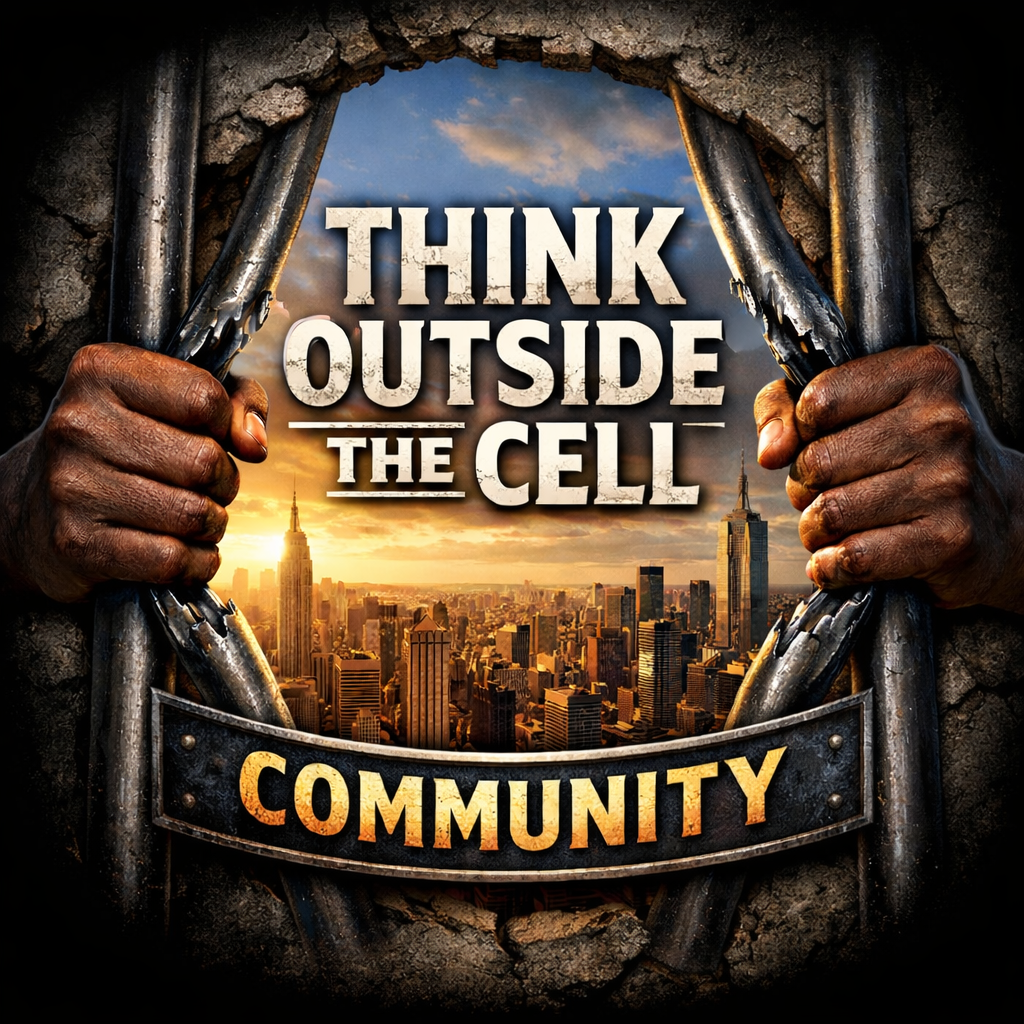
This experience reminded me that freedom isn’t just physical. It’s internal. It’s about reclaiming time, presence, and agency—one intentional choice at a time.
If you’ve ever felt rushed without knowing why…
If you’ve ever felt like you’re playing catch-up…
If you’ve ever been productive but still unsatisfied…
Look at your environment.
Sometimes the first step toward transformation isn’t a new goal or a new plan—it’s a chair, a desk, and a decision to show up as the person you’re becoming.
 |

Responses